September 2, 1960
Bulletin No. SB-798
Boats
SUBJECT: BOAT PERFORMANCE
We should continue to provide our Johnson owners with all the information
possible on conditions which have an adverse effect on the continued high
performance of their particular boat.
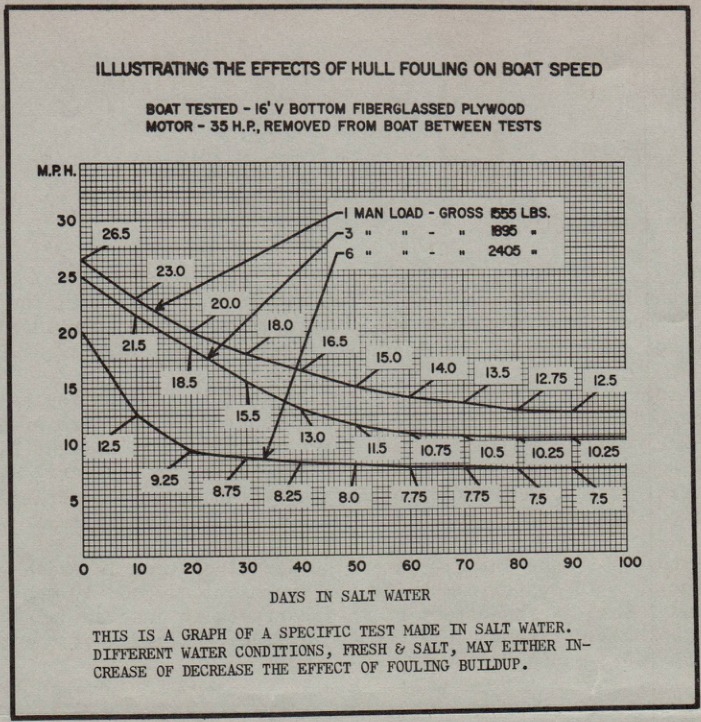
Bottom fouling is one of the biggest factors contributing to losses in boat
performance. In salt water this fouling is usually in the form of barnacles
and other marine life, while in fresh water it appears as a light film of
scum that is easier to feel than it is to see. Even in its early stages,
this film will result in drastic loss of performance, as illustrated in the
accompanying graph on the reverse side of this bulletin, figure 1.
While this test was made in salt water, an identical test in fresh water
showed surprising losses of 5 mph for the two man load, and 10 mph for the
six man load. This is the effect of marine growth in just 30 days! In
each case the hull was thoroughly cleaned at the conclusion of the test
and original performance restored.
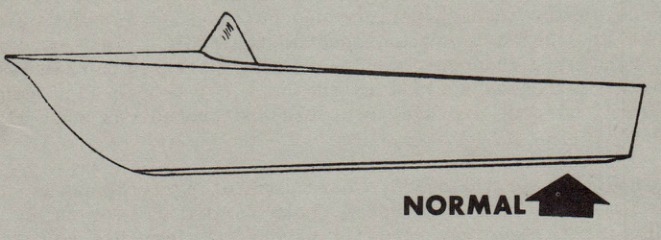
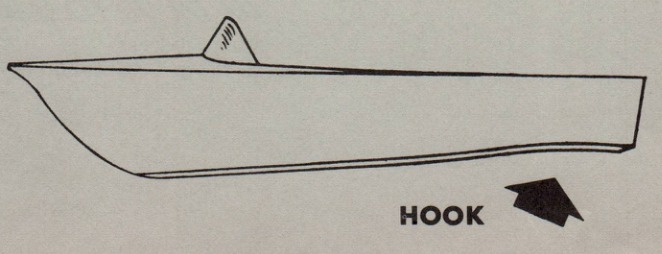
Another significant factor contributing to loss in performance is the shape
of the boat bottom. The actual warping of the planing surface, known as
a "hook", shown in the illustration, figure 2, is very important, and very
easily overlooked. The result is that the contour of the after planing
surface, so necessary in high performance hulls, will actually exert drag
when the boat is underway, causing loss of top speed. This condition will
occur more frequently than before, due to the increased horsepower and the
resulting higher stresses applied to the hull. Improper adjustment of the
trailer rollers and poor storage practices and procedures will also produce
a hooked bottom.
It is suggested that in all cases, where loss of performance is suspected,
the boat bottom be thoroughly checked, both for marine growth and a "hook",
before condemning the engine. It will save a considerable amount of time
and effort for dealers, as well as owners.
JOHNSON MOTORS
W. W. DeWees
W. W. DeWees
Service Department
WWD:eb
NOTE: Post on your miscellaneous index.