
January 15, 1961
Bulletin No. SB-820 (Revised)
Shifting Mechanisms
SUBJECT: Complaints of premature gear and shifter clutch dog wear;
1960 & 1961 V-75 engines.
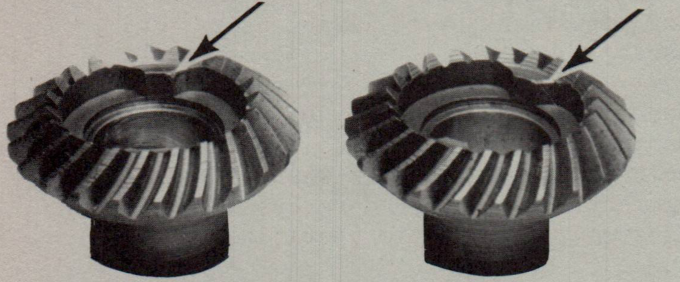
FIGURE 1
Figures 1 and 2 illustrate some of many
gears and shifter clutch dogs which were
claimed to be prematurely worn because top
edges of the ears are slightly, but
insignificantly, rounded. The arrows in
these two figures point to the worn ear
edges; here represented by the short, slim
highlights which invariably result from
brightly polished metal surfaces caused by
wear. This rounded condition is normal,
and is not indicative of faulty material,
parts or workmanship.

FIGURE 2
Rounding, or wear, of ear edges on gears and clutch dogs is a
normal occurrence even though the operator's shifting practice is
ideal; that is, smartly snap-shifting instead of attempting to ease
into gear. Apparently many dealers analyze such ear wear as being
the result of faulty parts, material and/or workmanship; particularly
considering the many warranty claims received at the factory for
replacement of such parts as are illustrated here. These parts
were not faulty from a material or workmanship point of view and
were therefore not really entitled to replacement under warranty.
Wear of gear and clutch dog ears can be very much accelerated by
operators who possess the mistaken belief that gentle shifting
(easing into gear) is the proper practice to safeguard the shifting
mechanism and engine in general. This idea is particularly prevalent
in the minds of operators who are new and uninitiated to outboarding. Actually, the thought
is totally erroneous because easing into gear causes the ears of gears and clutch dogs to
rap and slide off their edges many times during one shift maneuver before gear engagement
is finally accomplished. This repeated rapping-and-sliding-off process is the direct and
principle cause of accelerated ear wear as well as a cause of their chipping.
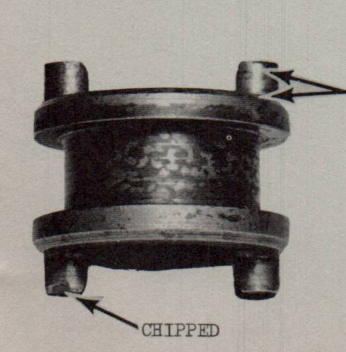
FIGURE 3
Figure 3 illustrates a chipped ear on a clutch dog which was
replaced under warranty. Since this clutch dog fully engaged
the gear as intended, correct shift linkage adjustment is
indicated; (note that the contact area, indicated by the highlight
between the arrows on the upper, right hand ear, extends the full
depth of the ear). Chipping is therefore believed to have been
caused by the aforementioned rapping-and-sliding-off process of
gear and clutch dog ears. Here, again, chipping is more indicative
of faulty shifting practices by the operator than it is indicative
of faulty parts or workmanship. This clutch dog, while not
recommended for reuse due to the chipped ear, should have been
replaced at the customer's expense rather than under warranty;
(over)