
Johnson Service Bulletin SB-945 - Torquing Cylinder Head Bolts

March 6, 1963. Johnson explains the importance of tightening cylinder head bolts in the correct sequence to distribute gasket compression evenly and prevent cylinder head distortion.

Johnson Service Bulletin letterhead
March 6, 1963
Bulletin No. SB-945
Specifications
SUBJECT: TORQUING CYLINDER HEAD BOLTS.

At one time or another, we have all encountered failure with mechanical apparatus which could have been eliminated had the manufacturers torque specifications been adhered to during repair. Similar conditions can in some instances occur, however, even though proper torque tension is applied if the tightening sequence is incorrect - for example, cylinder head bolts.

We, therefore, feel it is important to discuss briefly the recommended procedure for torquing cylinder head bolts, especially since merely applying the specified amount of torque (foot pounds) is not sufficient.
Cylinder head bolts are torqued to a uniform specification for two reasons -
1. Compress cylinder head gasket to prevent leakage between water
   jacket and combustion chamber.

2. Prevent distortion of cylinder and warpage of cylinder head.
Since we are all familiar with mechanical structure, we well understand some of the problems that result from uneven torque applications to the various bolts of a given engine. But what about torque sequence? This factor is commonly overlooked and is as important as the amount of torque when tightening cylinder head bolts.

Torque sequence is that part of torquing which evens out the gasket between the cylinder and cylinder head. It starts in the middle of the cylinder head and progresses evenly toward each end - as illustrated in Figure 1. Gaskets actually compress or "flow" under torque tension which is why proper sequence is so important.

Remember the following procedure when torquing cylinder head bolts. Continual use of procedures such as this always pay off in terms of satisfaction - both customer and dealer types.

1. Always use a torque wrench.

2. Remove all gasket particles from cylinder and head.
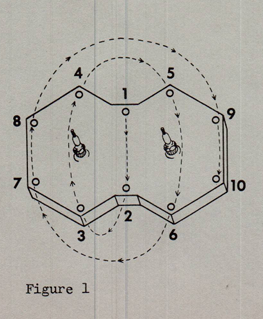
Figure 1 - original ten-bolt cylinder head torque sequence
Page 2

3. DO NOT USE GASKET CEMENT. It is permissible to coat both sides of the gasket sparingly with engine oil prior to assembly.

4. Lube threads of head bolts with engine oil - 30 weight will do.

5. Torque head bolts in sequence (Figure 1) to manufacturers specifications. DO NOT OVER TORQUE. Repeat torque sequence a second time to insure uniform torque.

6. Re-torque all head bolts after engine has been tank tested. Do not torque while engine is hot - torque only when engine has been allowed to cool for a brief period.

Re-torquing head bolts is always necessary after the re-assembled engine has been run since existing head bolt torque tends to compress the gasket even more at engine operating temperatures. This condition is characteristic of composition type gaskets and is commonly referred to as "hot flow".
Sincerely,
JOHNSON MOTORS
Robert Compton
Service Department
RC:eb