Johnson Service Bulletin SB-989 - Slow Speed Needle Adjustment
Issued October 22, 1963, this four-page factory bulletin explains initial and fine adjustment of the four slow-speed carburetor needles on Johnson 90 HP V4M(L)-10S outboards. The original photographs, procedure sequence and factory page divisions are preserved below.
October 22, 1963
SUBJECT: SLOW SPEED NEEDLE ADJUSTMENT - 90 HP CARBURETOR
ON ENGINES: MODELS V4M(L)-10S
Correct procedure for making initial slow speed carburetor adjustment on all 90 HP
engines is outlined here.
1. PRELIMINARY - ENGINE IN TEST TANK EQUIPPED WITH TEST WHEEL, PART #379695.
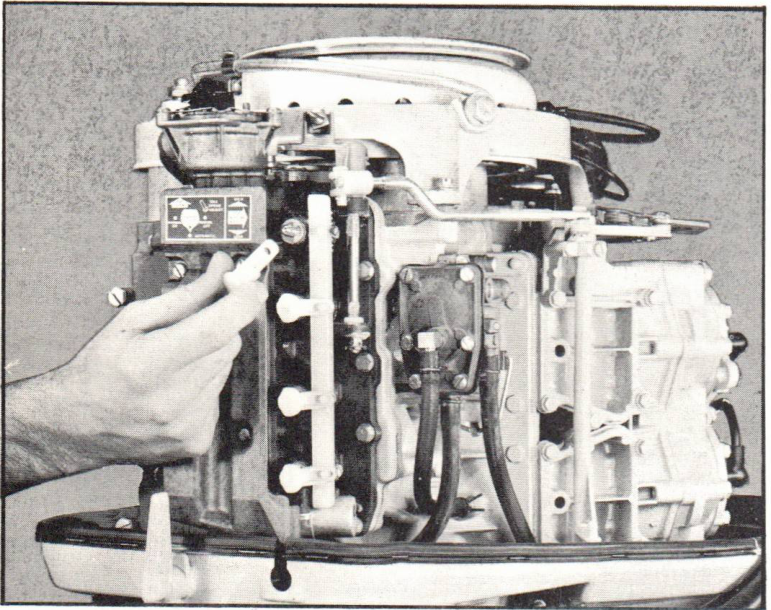
FIGURE 1. Removing slow speed needle
adjusting knobs.
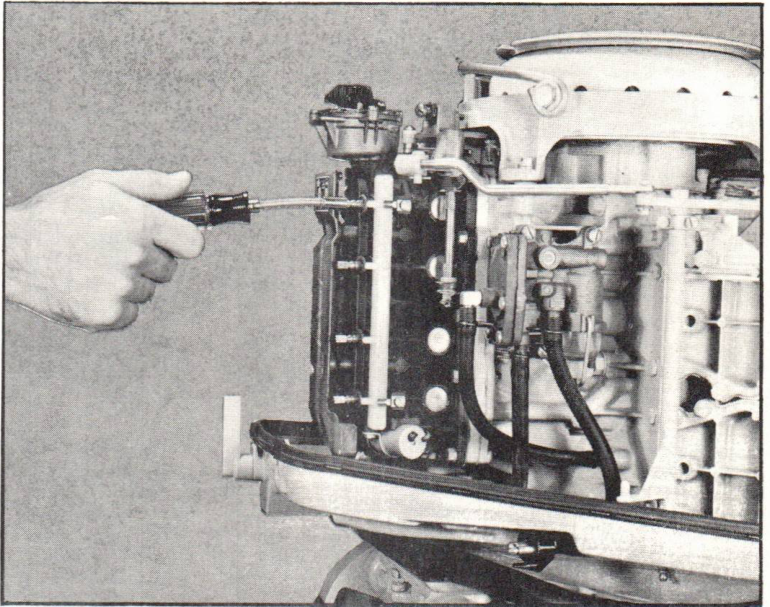
FIGURE 2. Adjusting slow speed needles,
to seat - turn clockwise. To
back off - turn counter-
clockwise.
A. Remove all four slow speed needle valve knobs - (Figure 1).
B. Gently seat each slow speed needle by turning clockwise (Figure 2).
From this closed position, back off each needle (turning counter -
clockwise) approximately 5/8 turn. Engine will start and run at
this initial setting.
C. Connect tachometer to motor.
D. Set choke to automatic position and start engine - shift engine into
forward gear.
Over
Page 2
SB-#989
2. ADJUSTING PROCEDURE.
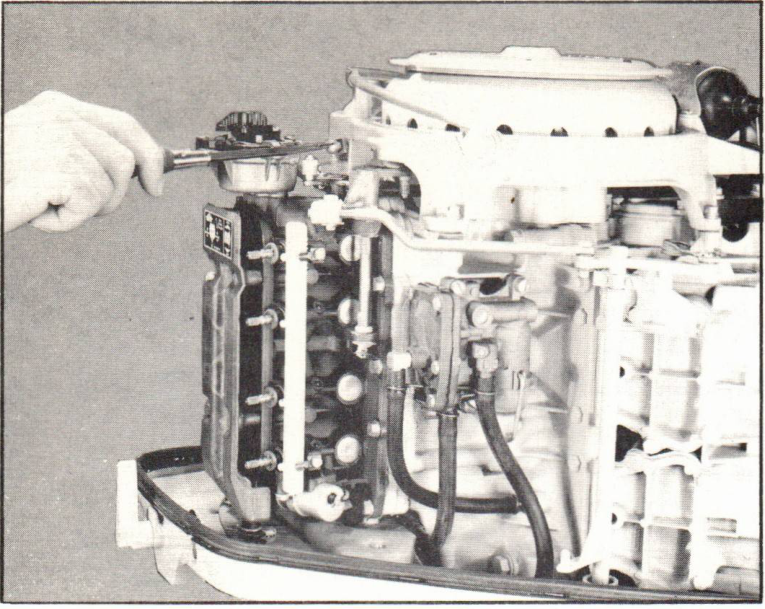
FIGURE 3. Using screwdriver to set engine
idle speed. To increase speed -
turn screw clockwise. To reduce
speed - turn counter-clockwise.
A. Turn idle speed adjusting screw against
screw stop (Figure 3), so that engine is
running at fast idle (1800-2000 RPM).
B. Wait until engine reaches normal operat-
ing temperature before attempting to
adjust needles. Operating temperature is
indicated when automatic choke butterfly
reaches wide open position.
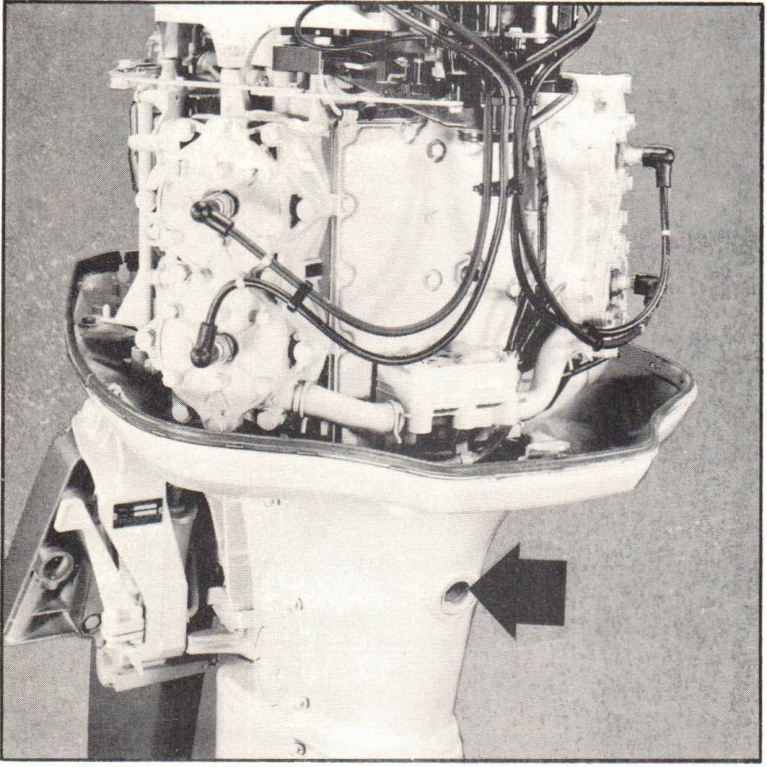
FIGURE 4. Showing water discharge tube
(arrow) in exhaust stack
assembly.
NOTE: Normal operating temperature is also
indicated in the thermostatically
controlled 90 HP engine by a decided
increase in water "spurting" from
the discharge tube in the exhaust
stack assembly (Figure 4).
C. After warm up - back idle speed adjusting
screw off (Figure 3), reducing engine idle
to 600 RPM.
D. Erratic or sluggish idling performance will undoubtedly prevail with slow speed
needles set at 5/8 turn open. Adjust each slow speed needle - starting from the
top needle and working down (1, 2, 3 and 4), until all needles appear to be
adjusted for best slow speed running. See Figure 5.
Page 3
SB-#989
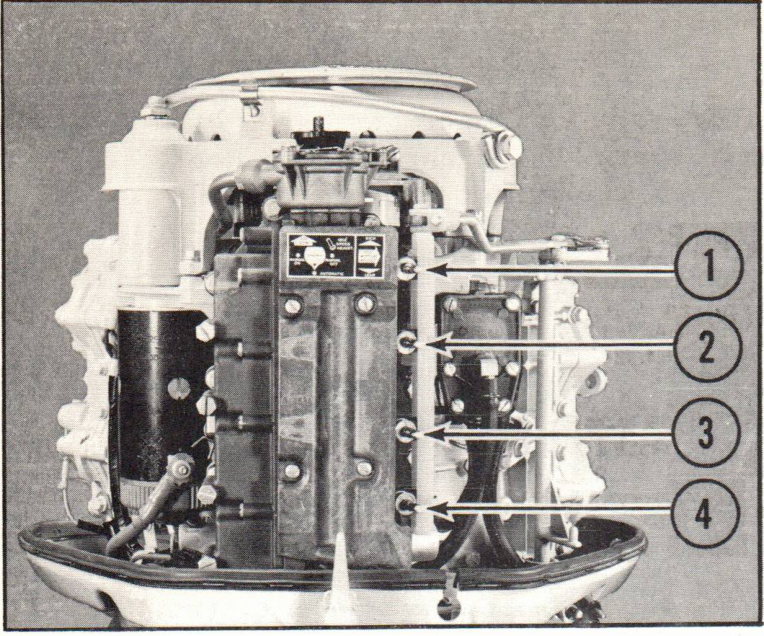
FIGURE 5. Slow speed carburetor needles -
1, 2, 3 and 4. Adjust in this
sequence, starting with needle
identified as number 1.
Adjust each slow speed needle separately
by turning needle in, to point where
engine starts running rough; at this point,
back needle off just enough to effect
smooth engine idle. In most cases, 1/8
turn back will be sufficient.
With slow speed needles presumably in adjustment - run engine for a moment at near full
throttle. Retard throttle to idle and re-adjust slow speed needles if necessary.
E. It may be found necessary to repeat above procedure several times until maximum or
best performance is obtained at idle and slow speeds.
IMPORTANT:
To check performance of engine in slow and intermediate speed range - reduce engine
RPM to idle speed. Gradually open throttle to full speed while noting performance.
Flat or lean spots generally indicate that one or more needles are set too lean.
Re-adjust slow speed needles if necessary, to achieve smooth operation throughout
slow and intermediate speed range.
Engine idle performance should not be affected if slight re-adjustment is found
necessary to improve slow and intermediate speed operation.
F. Restore position of each slow speed needle adjusting knob on its respective
needle so that it engages adjustment quadrant. Once slow speed needles have
been adjusted for best average performance, the operator (owner) should be advised
against personally disturbing this balance - other than within the range limits
of the quadrant provided for the purpose.
G. Engine idle speed may vary as slow speed needles are brought into fine adjustment.
Once needles have been adjusted - idle speed should be checked and re-adjusted
to 600 RPM if necessary (see Figure 3).
Initial slow speed needle adjustment of 5/8 turn open will be sufficient to permit
starting and running any 90 HP engine that has relatively few hours of use. After
the engine accumulates more hours of running time, however, this initial setting
may be reduced to 1/2 turn open.
Over
Page 4
SB-#989
It may also be noted that the final slow speed carburetor adjustment on 90 HP
engines will be slightly leaner for some cylinders than for others. This does
not necessarily indicate carburetor malfunction and should not be interpreted
as improper fuel distribution.
The 90 HP engine does not route crankcase bleed-off overboard as does the 75
HP, but re-distributes it back through the leaf plate into the engine.
Re-distribution of fuel in this manner may be more concentrated in some cylinders
than in others, which will necessitate a slightly leaner adjustment of slow
speed needles for those cylinders.
A special screwdriver is shown in
Figure 2, for adjusting slow speed
needles on the 90 HP carburetor. A
tool, similar to this, is being
developed and will be made available
to Johnson Dealers for this purpose.
Announcement of availability will
be by service bulletin.
Sincerely,
JOHNSON MOTORS
Robert Compton
Administrative Assistant
RC:eb
NOTE: Post on your 90 HP index.
Historical service reference
Applies to 90 HP V4M(L)-10S engines. The factory procedure calls for test wheel 379695, an initial needle opening of approximately 5/8 turn, warm-up at 1800-2000 RPM, and a final idle check at 600 RPM. The original instructions are reproduced above for historical reference.