June, 1976
SUBJECT: Tachometer Failures - Part Nos.
172254 172709 172930
172258 172710 172931
172674 172928 173049
172675 172929 173226
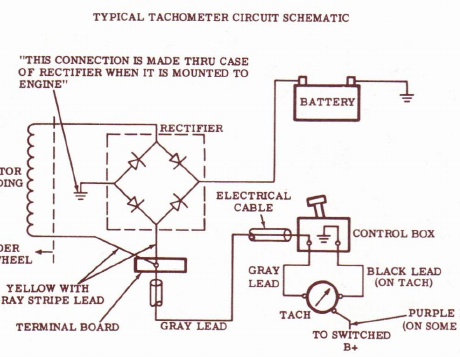
The subject tachometers are vulnerable to failure because of a malfunction or failure of other components in the electrical system of the engine. The most common is a motor rectifier failure which causes high voltage on the tachometer input and "burns out" the transistorized circuit within the tachometer. This is sometimes apparent when a burn spot appears on the tachometer case. Upon failure of subject tachometers and PRIOR TO INSTALLATION OF A NEW TACHOMETER, the motor rectifier should be tested in accordance with the motor service manual.
One misconception is that tachometer failure can cause failure of the rectifier or other electrical components. This is not true as the tachometer does not regulate or alter the line current in any manner. It simply draws current from the electrical system and even when "burnt out" will not affect operation of the rest of the system.
Other possible causes of malfunction or failure of subject tachometers are as follows:
1. Incorrect Application - Refer to accessories catalog for proper application.
2. Incorrect Installation - Check instructions and follow carefully.
3. Corroded Battery Terminal - Will burn out tachometer. Clean and reinstall.
4. Running With Battery Disconnected - Will burn out tachometer.
5. Loose Ground in Engine Wiring - Will burn out tachometer (Refer to typical schematic). Example: Loose rectifier mounting - Ground lead off of battery or engine.
6. Weak or Dead Magnets in Flywheel - Will cause tachometer to read Low.
7. Open Stator Winding - Tachometer will not operate.
8. Blown 20 Amp Fuse in Engine Wiring Harness (1976-V-6 only) Will burn out tachometer.