 April 3, 1963SERVICE PROMOTION BULLETIN NO. 336
SUBJECT: OVERBOARD MOTORS - SUBMERSION
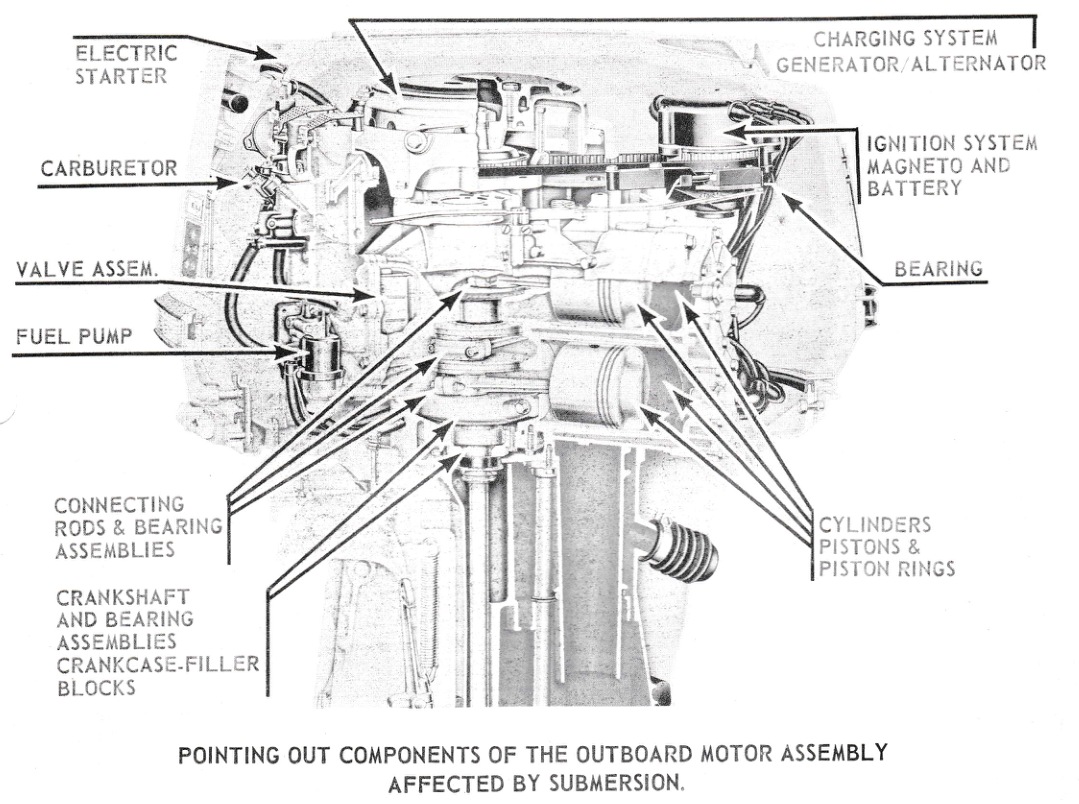
POINTING OUT COMPONENTS OF THE OUTBOARD MOTOR ASSEMBLY
AFFECTED BY SUBMERSION.
Overboard (submerged) motors often present a somewhat perplexing problem when brought into the shop for attention - sometimes leading to disagreeable misunderstanding with the owner unless he is made aware of the destructive conditions frequently associated with submersion. He may not realize or understand at the moment just what precautionary steps are necessary and advisable during the process of restoring operation. A tactful explanation and an appraisal of restoration cost should lead to a mutual understanding before actually commencing the job. An immediate decision and the owner's consent to proceed, however, is imperative.
SPB No. 336
The process of rusting and/or corrosion as result of submersion simply will not await delayed attention - it goes to work at once and as such, attacks the highly machined surfaces of motor parts and components of the electrical system with disastrous and costly results.
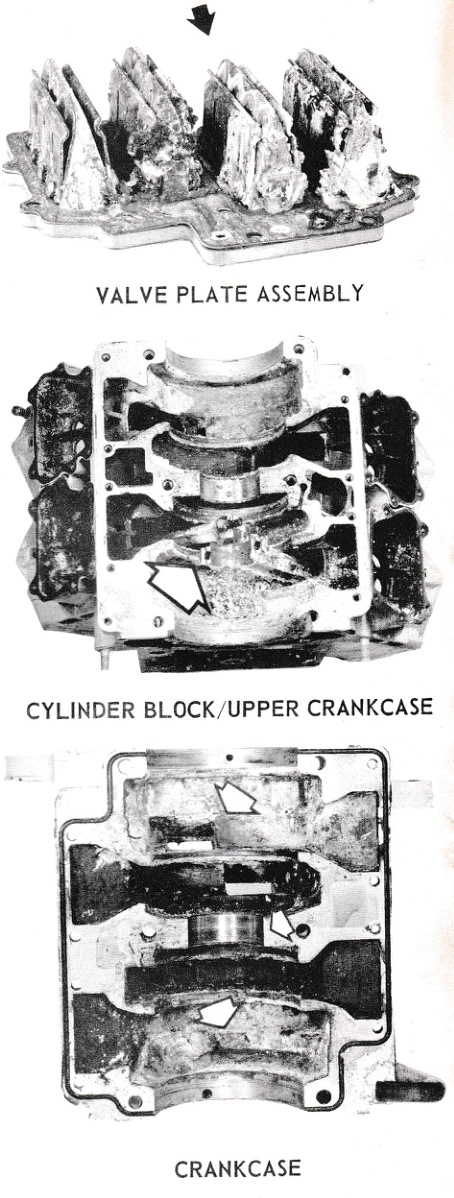
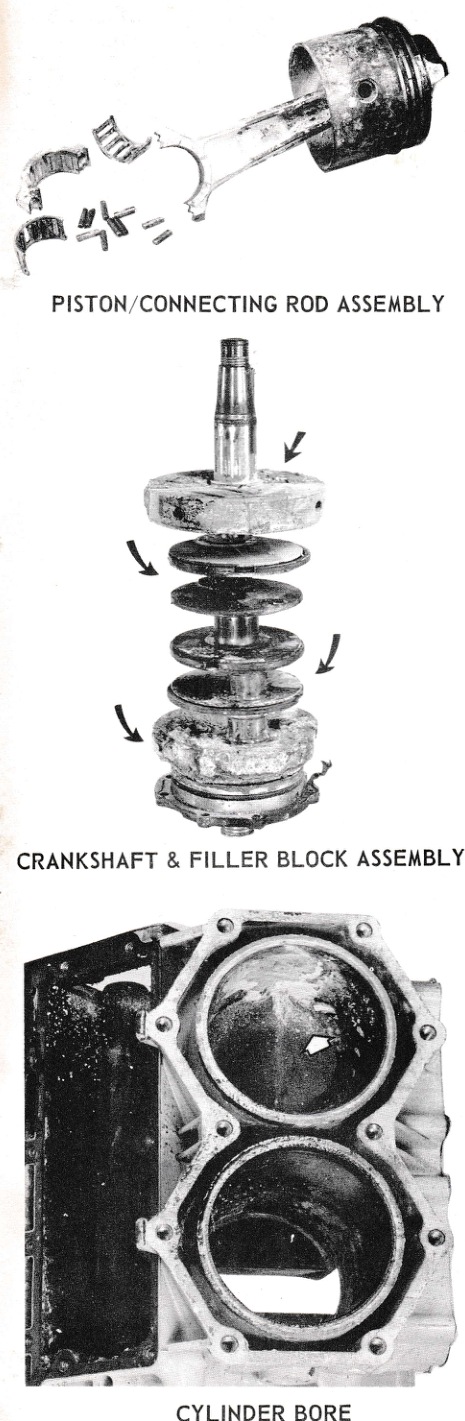
The illustrations here shown, reveal emphatically the effects of belated or improper attention after submersion and speak for themselves. In this instance, the motor involved was recovered from salt water submersion but for some reason was not given prompt and proper attention.
Submerged motors brought to a dealer must be assumed to have been exposed to the atmosphere for several hours after recovery.
As the modern outboard motor has a full complement of anti-friction bearings, both roller and ball as well as needle, a complete tear-down of the powerhead is mandatory. Both fresh water and salt water will start etching the highly machined bearing surfaces on the crankshaft and connecting rods as well as the bearings themselves. If caught early enough, the bearing surfaces may be cleaned up if the etching is not too severe. Rarely can the bearings be saved. It is quite risky to try to re-use submerged bearings, especially if submerged in salt or silt-laden water. Replacement of bearings should be made.
Many motors, especially V-4 cylinder models have magnesium "filler blocks" bolted to the crankshaft. Once exposed to salt water submersion, these magnesium blocks and any other magnesium parts must be replaced as immediate and continuous corrosion begins. This is true regardless of the length of time submerged. Fresh water, containing certain minerals and alkalines will also have a deteriorating effect on magnesium parts which would dictate replacement.
Submersion of electrical components such as starter motors, D.C., generators, alternator generators, ignition systems, (both magneto and battery) junction boxes and regulators, etc. will require immediate attention and tear down. Salt water submersion generally requires greater repair and replacement of parts than fresh water submersion.
SPB #336
Generally, the gearcase and swivel brackets are not too effected by submersion however, it is most advisable to drain and refill the gearcase with the proper type of lubricant, and also lubricate thoroughly the swivel bracket and pivot shaft.
For best results and most economical restoration costs, an overboard motor obviously ought to be recovered as quickly as possible after submersion and delivered at once to the Service Shop for immediate tear down, inspection and determination of whatever measures are necessary to restore normal operation - a matter within 2 to 3 hours. A minimum of time lapse between recovery and acceptance at the shop cannot be over stressed, particularly so in salt water regions.
Rusting or corrosion work at their best in the presence of air. Moisture remaining in the motor after recovery (both fresh and especially salt) simply hastens the process.
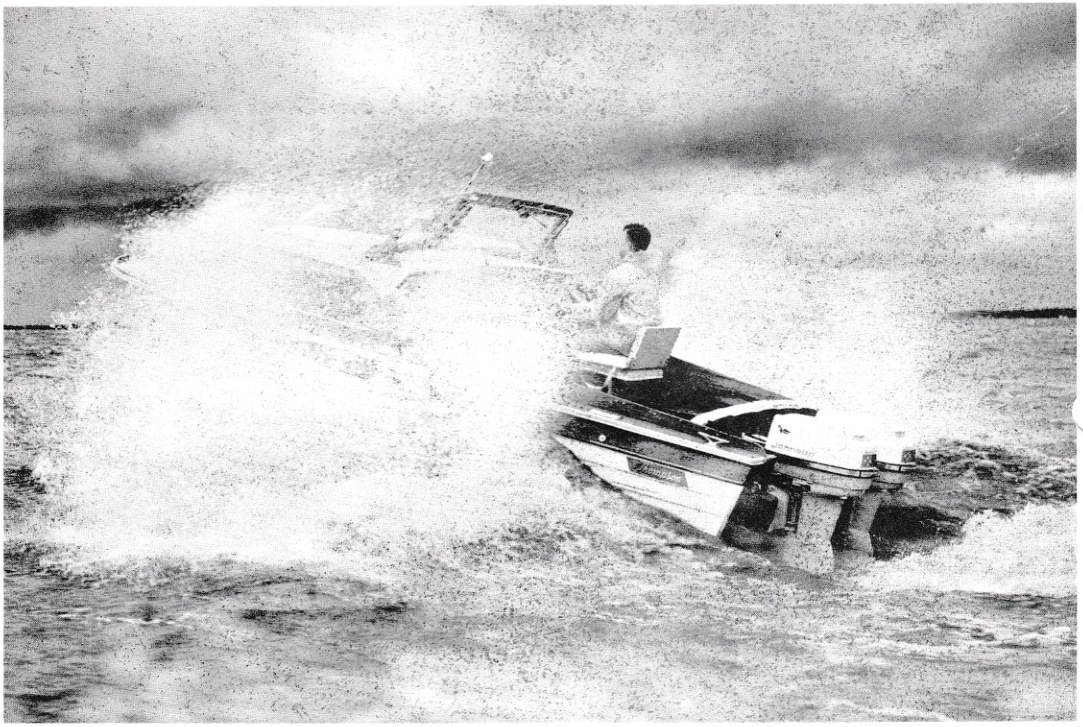
Note this - motors frequently go overboard while operating at high RPM. The resulting consequence is damage to the internal parts - water, under the circumstances enters the crankcase thru the carburetor and since it is not compressible, something's got to give.
Further - sand, mud or grit often enters the crankcase when submersion occurs to cause disastrous results should the motor be started.
The most practical and reliable solution obviously after submersion is a prompt shop tear down for inspection and restoration procedure.
All in all, an expensive bit of misfortune but easily avoided if the necessary precautions are taken in advance, particularly with respect to the motor installation (stern clamps or mounting made secure) and by adhering explicitly to the rules of sensible boating and proper mooring.
JOHNSON MOTORS
Waukegan, Illinois